Books

“Shrivers: The Substrate Wars 3”: First Look

PrintCover6x9v1_975x698

Based on feedback from workshopping it at Taos, I’ve rewritten the opening of Shrivers: The Substrate Wars 3. The book won’t be done for months, but if you want a preview, here it is in PDF format: Shrivers First Look. Now if I could only find an agent or publisher!

For Some Writers, Only the “Political Now” Matters

Ancient SF

Ancient SF

One thing that’s lacking among our progressive brethren is humility, a sense of what they don’t know and should not try to fake knowing. They are ahistorical and programmed by a faith-based belief system (for example, the faith that “all gender roles are social constructs with no biological basis.”)

So you suggest gently to a young writer that they should not try to write science fiction without understanding the science well enough to project it plausibly. Especially if the writer is a young woman, she will protest and say something implying science is also just a social construct, meaning “whatever I feel it should be, it is.” Or ask that historical novels be reasonably well researched and plausible — which is asking too much for some. They believe it is unfair to criticize some people for writing implausible or inconsistent stories, because by doing so you are discriminating against them and interfering with their right to succeed. Ultimately, of course, readers determine what is read, but by influencing what is promoted and made available at retail, progressives are insuring readers get less of what they want and more of what the nomenklatura think is good for them. And these literary-progressive writers are encouraged by academia and grants to think their status entitles them to success as writers — and while the very best of them will be successful writers, the majority will not be read by anyone outside their mutual support group.

Initially science fiction was about future science and the reactions to it from individuals and societies not too different from those of the day. Then the New Wave introduced a greater emphasis on imagined future or alien societies with quite different motivations and systems — when well-done, the rules of the imagined societies were plausibly projected from the biological, social, and economic motivations of the members of the society. In fantasy, you again had plausible workings-out of magic systems, fantasy entities, and societies of elves and the like. It’s the working out and understanding of the story problems presented by an imagined plausible world that expands the mind and increases understanding of very different Others.

If stories include mostly characters who behave as modern progressives think they should, any broadening effect is lost. Modern taboos and habits of thought were developed to match a modern milieu, and it is wrongheaded and anti-diversity — a variety of cultural imperialism! — to imply that people of the past and future would adopt and benefit from current ideas of “correct thought.” This error is a variety of presentism — applying standards of the current day to past and future societies.

Progressives accept an alien biological imperative and will sit still for stories where, say, the male sex of the G’Tharr are confined to their homes but no one in their society is especially interested in equality. But when the society is recognizably human, then suddenly the correctness goggles appear, and characters who behave like the perceived recent enemies of their tribe are not tolerated.


Death by HR: How Affirmative Action Cripples OrganizationsDeath by HR: How Affirmative Action Cripples Organizations

[From Death by HR: How Affirmative Action Cripples Organizations,  available now in Kindle and trade paperback.]

The first review is in: by Elmer T. Jones, author of The Employment Game. Here’s the condensed version; view the entire review here.

Corporate HR Scrambles to Halt Publication of “Death by HR”

Nobody gets a job through HR. The purpose of HR is to protect their parent organization against lawsuits for running afoul of the government’s diversity extortion bureaus. HR kills companies by blanketing industry with onerous gender and race labor compliance rules and forcing companies to hire useless HR staff to process the associated paperwork… a tour de force… carefully explains to CEOs how HR poisons their companies and what steps they may take to marginalize this threat… It is time to turn the tide against this madness, and Death by HR is an important research tool… All CEOs should read this book. If you are a mere worker drone but care about your company, you should forward an anonymous copy to him.


Sunday Pimping

Red Queen: The Substrate Wars 1

Red Queen: The Substrate Wars 1

Ah, “pimp Sunday.” Another fine tradition that starts today!

I got back from Taos Toolbox three weeks ago. It was interesting meeting people mostly going the tradpub route, working hard to get short fiction into publications. It was suggested I need to write some short stories to get my name known, so I wrote one, which has so far survived the winnowing process at a new ‘zine, Mothership Zeta, which looks like it’s going to be a fun read.

Also interesting to learn that even what I would consider to be proven great writers — Walter Jon Williams and Nancy Kress, who ran the Toolbox — have trouble getting and keeping good agents and publishers. Walter is now doing well self-publishing his backlist, but even he has difficulty getting major projects off the ground. Meanwhile, Nancy (a self-described pantser, meaning she doesn’t plot out a book in advance) has written one good novel she can’t get published, and despite winning a Nebula for her latest novella and being one of the better-liked writers around, has a spotty record in getting publisher support.

The takeaway lesson is that changes in the publishing business are pushing writers into self-publishing, where at least they have a chance at making a living if they work hard and develop a deep backlist. The total revenues in conventional SF&F publishing are stagnant or falling, and new markets like media tie-ins, flash fiction, and new venues like phones for reading are where many of the readers have gone. There’s a great hunger for SF&F works in developing countries, and anyone looking ahead has to consider getting their work out in Simplified Chinese and publishing with some of the phone media platforms out there. Which all ties in to the Hugo controversy, where a tiny US-centric group has defended their award as “the best of SF&F” but retreat to “what Worldcon-going fans (less than two thousand voting each year before 2014) think is best” when questioned closely.

But wait, I’m supposed to pimp my work here. My current series, The Substrate Wars, is about a group of libertarian-ish students who discover that the universe runs on a computational substrate, and by hacking the substrate with quantum computers, they can create not only quantum gateways to anywhere, but weapons of unimaginable power and replicators that can end material shortages for everyone. They are pursued by Homeland security and the intelligence agents of many nations before they escape to a New Earth, then work from there to free Earth’s people from their security and surveillance states. Working out how you would actually do that while doing minimal damage was a lot of fun.

My Taos readers found the going a bit rough on the start of the third book, tentatively called “Shrivers.” So I’m reworking the beginning to provide a stronger narrative line. OTOH, several spontaneously commented they thought the series would make great movies (based on the synopses I had prepared.) So I’m working on that now, heading to the Calliope Workshop, a new weekend seminar at UCLA meant to introduce new writers to agents and publishers interested getting liberty-oriented stories into pop culture outlets like movies.

The “logline” started out as a single-sentence description encapsulating the setting, protagonist, story problem, antagonist, and goal, which would be hand-written on the spine of a script or in the reading log as an executive summary. The idea is to demonstrate the basic appeal of the story so that a decisionmaker can quickly reject it if it doesn’t work for their purposes, or ask for more if it does. Time is short and no one in the industry has time to do more than reject 99% of what’s presented to them as quickly as possible. So remember the lesson of Powerpoint’s dominance: you only have a few seconds to get someone interested enough to stop for your work.

Loglines for the Substrate Wars books:

RED QUEEN

In a near-future US surveillance state, California college students invent quantum gateways and have to fight Homeland Security to gain their freedom on a new planet.

http://amzn.to/1Idwmx1

NEMO’S WORLD

From their base on a new planet, freedom-fighting techno-rebels use their discovery of quantum gateways to steal all the world’s nuclear weapons and bring down Earth’s oppressive governments.

http://amzn.to/1IibqTw

SHRIVERS

As humanity expands to new colony planets and enjoys a Golden Age of peace and prosperity, the new government has to fight a fleet of robotic destroyer ships to save humanity from extinction.

[In progress: release date around November 2015]

One of my earlier books on applying attachment theory to relationships and mate-seeking is still free today: http://amzn.to/1IibPVO

Back from Taos Toolbox

Taos Toolbox 2015

Taos Toolbox 2015 Class

I attended this year’s Taos Toolbox novel-oriented writing workshop, which wrapped up Saturday. Instructors Nancy Kress and Walter Jon Williams whipped us into shape (literally — a whip appeared mid-workshop), with special guest lecturers Carrie Vaughn and Emily Mah Tippetts. A marmot subbed for the usual bear appearance, and here are a few of the notable critique quotes (as collected by Nancy Kress):

“You really can’t be understated if you are a vampire clown.”
“It would probably take more than three days to eat a whole human being — although I don’t know that personally.”
“St. George the Dragonslayer should drive a Charger, not a Mustang.”
“There was a little too much pig fighting.”
“Your critique makes me glad I did not get a degree in literature.”
“It’s a gi-normous playground of awesome.”
“Get those characters out of that apartment!”
“I can see that you incorporated everyone’s critiques of your last week’s story. The problem is that you incorporated everyone’s critiques of your last week’s story.”
“I HATE rats and I will never ever read this story about rats again!”
“I know he’s the kind of person who doesn’t do his own rat killing because he can correctly use a word like ‘penultimate.'”
“I don’t mind them devouring Chad for lunch because he’s sort of a dork anyway.”
“Will the real protagonist please stand up?”
“This is a new subgenre: the “clomance,” a romance between a person and a clone.”
“I want the meaning of life to be more than an orange muffin.”
“I didn’t enjoy his tongue getting cut out.”
“It was dystopian but without the fun parts of dystopia.”
“I love the alien eggs, but they gotta go.”
“The character seems like Jane Bond.”
“It was nice to have a male character handed reproductive threats!”
“You have a missing clothing problem.”
“I get the impression you’ve never actually been a 20-year-old male Superpower.”
“You can’t start with an ‘Interlude’ because it’s not between anything — it’s just a ‘Lude’.”
“You have White Belgium Syndrome.”
“Unless this is ‘Dinner With Andre’ in space, you need more action.”
“She’s not neurotic enough for a high-school girl.”
“All female characters must keep their shirts on unless they’re actually on fire!”
“This story is torture across all five senses, and I thank you for that.”
“You’re not really suicidal if you’re having fun fondling breasts.”
“Everyone loves werewolves in mini-skirts.”
“If being grounded as a kid was all it took to trigger superpowers, I’d have godlike omniscience.”
“You should definitely go with the larcenous wood nymphs.”
“Everybody’s too sweet. I want to dip my toe in the cesspool of evil.”
“My favorite part was the mini-kayak armor.”
“I love the part where the girlfriend writes her good-bye note on the heating bill.”
“The harem of slave girls wasn’t enough to make him unlikeable to you?”
“Add more goats.”
“If this book had any more atmosphere, you could terraform Mars.”
“I like that Thor is a jock-boy and talks like Drunken Hulk.”
“I would love to see the Fury leave her anger-management session to go kill somebody.”

Attendees to watch out for: S Marino, Terry Gene, Patrick Lundrigan, Sharon Joss, Chris Kelworth, Diana Davis Olsen, Jeb Kinnison, Anna Yeatts, Brandon McNulty, Chris Bauer, Sally McBride, Lawrence Buentello, Paul DesCombaz, Ginny Campen, Gerda Shank, Barbara Caridad Ferrer, and Sunil Patel.

More on the workshop: http://www.taostoolbox.com/

Review: “Nemo’s World: The Substrate Wars 2”

Nemo's World: The Substrate Wars 2

Nemo’s World: The Substrate Wars 2

I missed this review of Nemo’s World when it came out on Goodreads, which I don’t pay a lot of attention to:

Kjirstin’s review Apr 08, 15
5 of 5 stars

After having escaped the immediate dangers of the last novel, the intrepid explorers and students turn their minds to how to use their new discovery — instantaneous travel to anywhere in the universe — to benefit the rest of mankind. But in order to make this possible, they need to defang the governments and ruling classes of the nations of Earth. So most of this story is about how they manage to maneuver politicians into realizing that their time is over. It was actually quite enjoyable having the recalcitrant US government being one of the last holdouts, absolutely SURE that they could somehow avoid the consequences and do things that would bring back the status quo ante.

I loved the idea of setting up colony planets and the gates to allow people to head there. (I have a soft spot for colonization and pioneering in my sci-fi in general.) It was such a hopeful vision — a way to move past the stagnant and ossified way of doing things and into something new with all sorts of potential. (As well as some musing over how to avoid the mistakes of the past, which we see as the first group of explorers have to set up a government for themselves.)

Great fun and a good addition to the series. I’m definitely looking forward to reading the next one when it comes out!

If you haven’t read the first in the series, Red Queen: The Substrate Wars 1, it’s best to start there.

Sarah Hoyt’s “A Few Good Men”

A Few Good Men by Sarah Hoyt

A Few Good Men by Sarah Hoyt

I’ve been too busy writing to do much reading, but I finally read A Few Good Men by Sarah Hoyt after several people mentioned its similarities in theme to my work, and Sarah herself mentioned it as something she is particularly proud of. So I bought it and plunged in without reading the two earlier books in the series.

Which turns out not be a problem, since the book stands alone despite some connections to others in the series — this book is set in the same universe and time as the others, but shows what is happening on Earth. A few characters from previous books make brief appearances toward the end, but nothing from previous books is required to enjoy the story.

And what a fabulous story it is. Several hundred years from now, after war and nanoplague have devastated continental civilization, genetically-engineered Good Men run the world as a feudal dictatorship from Seacities established as refuges. Enlightenment traditions of freedom and constitutional rights survive in the “religion” of the Usaians, an underground group which keeps them alive under the stagnant, repressive regime of the Good Men. Don’t be put off by the cover, which reminds me of that Star Trek episode with the Yangs and the Kohms (“Omega Glory”) — this story is a lot more sophisticated than the cover would indicate.

Luce, son of a genetically-engineered Good Man, has been in prison for 14 years when rebels attack his prison and free him. He makes his way back to his father’s Seacity and discovers that he is now the rightful heir to rule it since both his father and brother have been killed, but that the other Good Men are already plotting to take over his city. His allies are the family of retainers, also genetically-engineered, who have served his family for generations — and they happen to be secretly central to the rebels, who are trying to free the world from the Good Men and their tyrannical rule to restore what they remember of the freedoms won by the American (and French) revolutions.

I won’t give away too much of the plot, but it begins like a tale told by Dumas or Victor Hugo, and the hero and language are both reminiscent of the best of the 19th century adventure tales. Luce is a big man, full of self-doubt and guilt from killing his best friend and lover, Ben, and his first-person narration throughout is both a strength and a weakness — we see exactly where he came from and learn with him how his world really works, but when he is left behind to serve as revolutionary figurehead while others battle toward the end of the book, the story lags a bit because we don’t see the action. This would be a stronger story if Nat’s viewpoint had been expressed in a few alternating chapters.

Luce is an engaging narrator and despite his self-image as violent and unworthy, the reader grows to appreciate his kindness and sensitivity (when he’s not fighting his way out of danger by killing bad guys.) I enjoyed how the story went from The Count of Monte Cristo to 1776 to a subtle romance in a time of war with no actual sex. It’s accessible and quite appropriate for a high-school audience, yet with enough depth for even advanced readers.

A good story well-told. I plan to read others in the series soon.

SFF, Hugos, Curating the Best

Hugo Awards

Hugo Awards

The online discussion on the Hugos kerfuffle is winding down into endless nitpicking between entrenched opponents. As a long-term reader outside the Con/Fan culture, I have a few observations about how new technology and mainstream success of SFF tropes has marginalized written SFF fan culture while exploding the number of choices available, and thus the reader’s problem of reliable guidance in choosing what to read.

Looking back, SF, and later Fantasy, was entertainment for people who wanted to dream of future technology and space travel. Pioneers like Jules Verne used predicted future science and technology as elements combining with more conventional adventure, romance, thriller, and mystery stories to create a mix that was intensely appealing to readers of a scientific and futurist bent, sometimes viewed as escapist because of the contrast with the everyday lives of the time.

As the science of science fiction turned to reality, SF readers evolved to appreciate more nuanced stories with more speculative human interest, with alien civilizations and future humans interacting to reflect issues of culture and politics; this broadening was reflected in “New Wave” science fiction, which also used the more complex literary forms and techniques of literary fiction.

One of the faultlines in readership was already visible: simple, strong stories with linear narrative versus more sophisticated but less broadly accessible storytelling. Where a simple story with many levels can entertain readers at all levels of sophistication (example: the Harry Potter books), a more literary and adult version of similar topics of magic and coming-of-age (example: Lev Grossman’s The Magician) is not going to be as widely read, and only advanced readers will be able to understand and enjoy all of it. Both types can be great achievements, but most people would say only the sophisticated form is “literary.”

So when we’re handing out awards, do we want to recognize just the more sophisticated, but less popular works? I think that should depend on the awards. In the case of SFF, we have the Nebulas as a juried award from an organization of writers, who should be well-suited to picking based on achievement of craft, the recognition of the skill of the writer and the polish of the work. While such a group may choose to recognize an exceptional work that is also accessible, it is more likely they will be impressed by a work that is novel — it does something different, or in a new way, that demonstrates creativity. There will be a natural tendency to award the more advanced and literary over even the most excellent popular work.

Again, look back: when the Hugos began in the 1950s, there might have been a few hundred thousand dedicated readers of SF. Media and communications limited contacts between fans so that face-to-face conventions and clubs were the primary medium to pass along reviews and recommendations. Mainstream media had only the simplest types of SF: space adventure serials and monster stories. Comics were disreputable, to be replaced by real books for young readers as quickly as possible.

This all changed in the 1960s, with Twilight Zone and The Outer Limits on television, then Star Trek and Star Wars, which made science fiction tropes mainstream. Children from then on were raised on simplified staples of science fiction, and this provided an expanded audience for a whole new media universe of movies, games, comics, and anime. Novelizations of already-popular science fiction worlds started to sell in larger numbers than original stories.

So the Hugos are represented as “science fiction’s most prestigious award.” Depending on who’s blathering about it, they are either awards for quality science fiction for all readers, or the award presented by WorldCons which has become prestigious because of its long history of highlighting quality works. There’s a tension between claiming ownership for just Con-attending fans and claiming it represents quality for all fans, including readers outside Con fandom.

One horror often mentioned is the idea of a People’s Choice Award, meaning the lowest common denominator, the hordes of less discerning fans, might overwhelm quality works and choose, for example, the (mediocre but very popular) Twilight series of sparkly vampire romance novels, beloved of teen girls.

The Hugos that I grew up with were useful guides for readers not in touch with Cons and fandom looking for a good book to read, something worth the money and time. Why might that have changed in the past few years, as the Puppies contend?

The explosion of popular interest in all SF media has meant younger fans are now flocking to Comicons and other new festivals, and online spending time talking about movies, games, and anime, far more than SFF books. While readership has stalled for books, participation in other forms has ballooned. For those of us who grew up reading SFF in the 1960s, there’s not a lot of original thinking in the other media, and so we tend to dismiss them as derivative — and they often are. But that is where the future readers went.

As a result, WorldCon attendees are older than SFF readers generally, and far older than the body of possible readers that could be drawn into reading science fiction and fantasy as a regular habit. WorldCon Fandom’s cherished culture is a mix of whimsy, counterculture from the 60s, and insider references. The cultural gulf between them and average readers, especially younger readers, is larger than it has ever been.

One of the Puppy complaints is about the zealous progressive tendency they think has held back works that don’t advance that agenda, and authors who don’t represent “intersectional” minorities. There is probably some truth to that complaint — for example, “MilSF” (military SF), unless it is consciously antiwar (as in Forever War), is going to have a hard time winning over WorldCon voters no matter how good it may be, and the obvious fact that a lot of the subgenre is not very well written is used to denigrate all of it.

But the real problem is not political skew, that is a symptom. The issue is insularity, a consequence of the very small numbers of people who have been voting. Fans who are active in fan affairs are more likely to vote, and naturally favor friends, and publishers and writers work to befriend them. Publishers and writers who have an active Con and online presence are favored over those who do not, even when the works are of the same quality. The Brits as a class have been slighted for some time, for example, because they simply have less presence and contact with the bulk of US Fandom.

Honest WorldCon Fans can see that this criticism hits home, and this year’s kerfuffle should be used to advance the cause of more and broader participation. Someone pointed out that the Locus recommended list came close to predicting the nominations until recently, and the obvious reason is that it was one of the only guides to what qualified for nomination! So if anything one could celebrate the end of one magazine’s ability to determine the nomination list, and look forward to more lists of qualified works to guide the clueless on what to read and nominate.

“What to read next?” used to be answered, for me as an isolated reader, by looking through the list of new releases at Amazon. By scanning for authors I had read and enjoyed before, and occasionally taking a chance on a highly-rated book by an author new to me, it wasn’t hard to find good books. That began to change ten years ago, when the number of new releases began to grow and the quality of novels in general started to decline. This was before the explosion of self-publishing, which has made it worse, but the result was that the wheat was lost amid the surfeit of chaff. And the Nebula and Hugos each year were good guides to the best new fiction — this has also changed, as some recent winners were not all that satisfying to read or truly creative, from my point of view.

I think it was GRRM who recently observed that readers who didn’t regularly read fanzines were not committed enough to qualify as True Fans. Fanzines are certainly one way to communicate reviews and find better reading material; the fanzine for you is the one that shares your reading tastes, and so a curated list from a fanzine partly solves the problem of finding quality work, and could also be the key to suggesting lists of qualifying works for nominations. I have yet to subscribe to even Locus, and I probably should, but like everyone else I already have a vast amount of input to keep up with, and I suspect it would stack up unread somewhere. An online version that works with CSS might work for me, but I haven’t seen the right one yet.

From Rachael Acks: Sound and Nerdery: The Hugo Nomination Problem or, I Am a Bad Reader:

This is the point where I obviously speak only for myself, but what I need is help, to be honest. I don’t need someone breathing down my neck and telling me I need to nominate when I have no idea what the hell I’d even nominate. Some of it’s a self-actualization issue, where I need to just get off my ass and find the time to read more, and try to read things the actual year they come out. But it’s pretty overwhelming, guys. We are blessed to live in an age where your genre choices are not limited to what you can find on the spinny racks at the grocery store, or on that one shelf in your local library where the dude with the funny-smelling coat always hangs out. Which is awesome! But it also means that there’s so much coming out every day, at some point book mountain gets so high that you’re like fuck this, I don’t even know where to start so instead I’m going to make myself a cup of tea and play World of Warcraft while Captain America: The Winter Soldier plays on the TV in the background.

I’m sure this does not reflect on me well as a human being. I also know I used to read a hell of a lot more back before I didn’t have a full time job and a part-time writing gig and a daily commute during which reading tends to give me severe motion sickness. But here it is, the call for help. I seriously need some helpful soul, or maybe some kind of crowd-sourced thing that can tell me what I should be reading as things come out so I’m not floundering under drifts of pages on book mountain when the Hugo nomination period opens. Preferably some recommendation engine where my fellow writers, bless you guys I love you all but damn I know how we are, are not allowed to nominate or push their own books. I don’t want reviews, I don’t even want opinions, I just want a simple list or titles and authors and maybe a helpful link where someone can say hey, I think this book should totally get a Hugo, and then other people who agree can maybe give it a plus one, and that’s it. Let me form my own opinions.

If you don’t live and breathe fandom and live in a commune of SFF fans, this is a problem for you, too. One suggestion I have is for WorldCon people to join with others to develop their web presence and nominations booklet into something like a compendium of reader recommendations and a bundle for sale to give some revenue back to the nominees and their publishers for making their work available, as the Nebulas do with their yearly anthology. And this could be combined with some reforms in award categories to allow self-published works to have time to overcome obscurity when they are really good; it is a travesty, for example, that The Martian was disqualified for having been published in obscurity a few years ago even though it is recognized this year — following mass-market success — as one of the best novels widely read and *noticed* last year.

The idea is to take WorldCon into the future — to make it both a face-to-face and virtual presence, allowing much broader participation, and to start accepting the new media fans as they mature and want more advanced kinds of science and story. The problem of small groups destabilizing the awards goes away if participation is broadened, while the idea of ring-fencing the awards to keep out barbarians will ultimately continue the relative decline of WorldCon and old-school fandom into old age and irrelevance.

On File770, one longtime WorldCon supporter quoted me and commented:

JJ on April 29, 2015 at 8:02 pm said:

Jeb Kinnison: “I think we can get most reasonable people to agree that an award that supposedly recognizes the best SFF should be more broadly representative of the readers, including the vast majority who can’t take time out from busy lives or afford to go to conventions. Having a tiny in-group select award winners from their friends and people they know leaves out most of the writers, and almost all of the readers.”

Here is yet another person claiming that an awards program which was created and lovingly nurtured by Worldcon members for decades should somehow “belong to everyone” — without explaining how that’s actually supposed to work. Will “everyone” be putting in hundreds of volunteer hours every year to continue the program? Which day of Worldcan can we expect this “everyone” to be showing up to help?

It’s incredibly ironic that a bunch of self-described conservatives and libertarians think that they should be free to take for themselves, and give away, the labors of someone else’s initiative and ceaseless hard work, isn’t it?

Well, that was emotion-tugging. “Ceaseless hard work” is a bit hyperbolic. I don’t think anyone wants to take away the credit due to the WorldCon volunteers past and present for their hard work, or suggest taking away the awards for themselves. On the contrary, by developing non-attendee memberships and online voting, WorldCon already recognized that the views of the community that cared enough to pay and vote even when they couldn’t attend are important, and WorldCon reps have commonly told outsiders that not only are the Hugos the most prestigious award in SFF, but also are supposed to represent all readers’ interest in quality SFF. His suggestion that “showing up to help” is required to have any stake in the process is emotionally understandable, but not practical if there is to be wide participation.

So the classes of people who read SFF include:

The outer circle who like SFF ideas and stories but take them in the form of movies, games, and comics. This class includes several billion people, mostly young, across the world, and should be a primary target of recruitment to increase numbers of book readers and sales. I was recently contacted by a Chinese media company who wanted to sell my books translated into Chinese to their customers who largely read on their phones.

A hundred million people read some English-language SF. They never go to cons or read fanzines; they pick what they read by store display, word of mouth, or Amazon listing, and follow up on authors they like, and they are also fans of other media SFF which is widely promoted; it is impossible not to hear about the latest Marvel-universe movie, for example.

A few million read mostly SF. They may occasionally read fanzines or io9-like sites, but again have little contact with Fandom. I was in this class, and haven’t read an SFF magazine since Omni.

A few hundred thousand obsessively read SF and may account for about half of sales. These are the readers who are committed enough and knowledgeable enough to nominate, and many do go to regional Cons (but only a small number to Worldcon). Many are also game, anime, and film fans, and those under about 50 are likely never to have been involved with Fandom.

Remember there are ten times as many regular readers of romance. Romance mixed with paranormal (like Twilight) or science fiction (Hunger Games) sells to YA readers in large numbers; they are mostly female. Science fiction which feeds their romantic interests can bring them into more advanced science fiction.

“Curating” means selecting for quality and audience. WorldCon has been tending to curate for a small and eccentric audience, and favor-trading, log-rolling, and political prejudice has been apparent since… forever. WorldCon has already recognized the outreach possibility of the Internet. There is no longer a reason for what purports to be *the* award of SFF fans, not Worldcon attendees, to be closed to the fans who can’t be there, or as GRRM remarked, aren’t fannish enough to regularly read fanzines. If the award is to be chosen by small groups with a certain Fannish mindset, then it’s not *the* award of SFF readers and not a useful guide to quality for those who don’t share the mindset. And it will tend to slight publishers and authors who haven’t sucked up to the attendees and “curated” their online presence to groom their own fans. Some decry the possibility that the Hugos might become a mere popularity contest, with “Twilight”-ish popular works swamping the less-accessible quality fiction; but that ignores that the status quo prior to Puppies was a popularity contest among a small and not necessarily representative group shot through with personal conflicts of interest and logrolling.

We can honor all the work of the elders who curated and nurtured the Hugos when there was no other way for fans to get together. We can also open up the nominating and voting to committed readers who haven’t been Fannish, and the effort involved is more about software and thinking about systems than sitting at tables and handing out papers while chatting with passersby. There are problems with nominating voters being unaware of what qualifies, and problems with qualifications — suggestions about more classes for long works and allowing small pub and self pub books more time to be discovered are good.

As a new author, I’d like to preserve a large market for fiction because it is inevitable that larger media productions will be unable to pioneer new ideas or truly eccentric new virtual worlds — there are just too many people involved in these larger productions to take as many risks on unique visions, and until the tools for game storytelling, for example, are easily accessible and usable by singleton game authors, games won’t be the medium to create the experience of the great novel or story. Opening up the Hugos and doing more outreach to fans of other media would help a lot in renovating fandom and bringing in more new readers. And if the field doesn’t start gaining more readers, it will die, since it is already harder to make a living writing SFF than it used to be. If the only writers left working are supported by academia or other jobs, the field will lose its finest future works.

Sad Puppies Fallout: Vox Day and John C. Wright

sad_puppies_3_patch
[Pulled out of comments on Sarah Hoyt’s blog]

[Edit: further comments on Vox Day added after reading more of his blog]

And this is where I get to talk about Vox Day and John C. Wright, respectively the evil genius and the epitome of Badthink.

Vox is an example of an agent provocateur; he dances right up to the line to outrage stupid people who can’t parse what he says, then carefully avoids crossing it. Outraged progressives attack, his fans are engaged, and off he goes to huge traffic and increasing notoriety, which converts to more attention and sales. Using his name is now like invoking Voldemort. It’s not something I would do, but every ecological niche is filled in a complex society…

When I came out with my first book “Bad Boyfriends,” which was a sincere effort to help the clueless with useful information about attachment types and how they can determine relationship satisfaction, I had some reviewers mentioning that it was a “red pill” book, which I thought referred to the Matrix, where swallowing the red pill meant accepting the truth instead of living a comforting lie.

Then I discovered the huge number of (mostly but not entirely) men in the red pill / MRA movement. Looking through their writings, I found much that was useful mixed with some pseudoscience that was confirming their beliefs. So while sympathetic, I couldn’t agree with everything, but thought their point of view was important and a useful counterpoint to the feminist-dominated discourse increasingly taking over. I wrote a lot of pieces supporting some of their better points, and the guys at A Voice for Men asked me to do a piece or two. So I did. The commenters were an interesting mix of thoughtful and rabid, but I didn’t have any trouble soothing them when it was clear I sympathized even when I could not fully agree.

Those posts went up on Reddit and I had 4000 page views a day. Vox has this game down cold; he is serving red meat to starving men who need to hear alternative viewpoints.

I stopped writing for AVfM when one of my posts (which said some kind things about Emma Watson’s UN-based effort, which included a concession to male issues — see http://jebkinnison.com/2014/09/24/emma-watsons-message-intelligence-trumps-sex/) was seen as insufficiently rabid by many commenters. AVfM disowned it (must not upset base!) and then was set upon by one of their old opponents, David Futrelle at We Hunted the Mammoth, and his commenters.

Yikes! So much hate on both sides. So I stopped trying to mediate that war.

I don’t know Vox Day, and I haven’t read much of his work, so I am unable to disavow him or apologize for him. As someone remarked, if he didn’t exist, they would have to invent him, or some other Emmanuel Goldstein. [Edit: Having read quite a bit more of his writings, I can see where the widespread revulsion comes from. He often promotes pseudoscience which confirms the biases of his fans — I don’t have a problem with beliefs unsupported by evidence unless they are aimed at harming groups of people, but he promotes some that are intended to justify hatred against whole classes of people. In that, he’s just another quack, profiting by feeding fears with pseudoscientific justifications.]

As for John C. Wright, I’ve read and admired a lot of his work (but he owes me for the time spent to resolve the endless throne room battle scene in “Judge of Ages”!) The first book of his I read, “The Golden Age,” fixed him in my mind as someone I would happily read. But of course his Renaissance Man (from the actual Renaissance!) qualities include enough knowledge of history to disdain the current political line and its enforced forgetfulness. Like Orson Scott Card, he has some beliefs that the progressives find heretical, and he has tactlessly expressed them. But where others get a pass because their offbeat beliefs aren’t central to SJW causes, he does not. I remember reading Charles Stross’ first post on LiveJournal commenting on how Wright was now deemed too incorrect to be acceptable in civil society….

But again, I don’t know Mr. Wright other than from his works, which are usually very good. A writer who can get away with that level of digressions without causing me to toss the book has to be good.

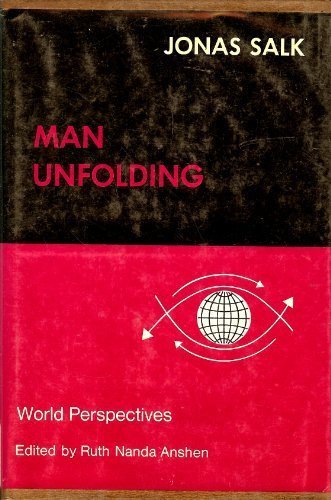
Jonas Salk and Me

Jonas Salk "Man Unfolding"

Jonas Salk “Man Unfolding”

One of my recent posts had me recounting where I came from to explain my point of view, and one of the readers realized it was likely we went to the same high school — and we did. In fact, his father was my high school math teacher, the almost-perfect Merlin Baker, who took me through early calculus and tensors.

Another episode that molded me: I was one of the top two in science subjects, and the principal (we spell it that way because he’s your pal, in case you haven’t heard that mnemonic) came by to ask if I’d be on a panel with some of my cohorts to ask questions of Dr. Jonas Salk, pop culture science icon and inventor of the first practical and effective polio vaccine. This would be at a big auditorium in the city, attended by hundreds of high school students. I now know it was part of a publicity tour for his first book, a foray into pop philosophy funded as part of a series by Major World Thinkers. They gave me a copy of the book to read and asked me to come up with intelligent questions he could field.

So I said yes, along with two friends, and we made up half the student question panel. On the big day we went down in buses with other science students, and they kept us seated at the panel table onstage while the audience settled.

For this story to make sense, you have to realize I was a painfully shy kid. My nightmares were about being the center of attention, or being embarrassed. I spoke up in class only after I felt comfortable with the people in it. So I was far from the ideal choice to be on stage and talking in front of hundreds of strangers.

What’s worse was what I felt I had to say. I read his book, and it was mostly armwaving — strained analogies between problems of growth in lower organisms and humanity. Yes, some of these things look a little like the other things, but the casual use of analogies gives the wrong answers to important questions, just as assuming humanity is just like an ant farm or a pack of baboons misses much of the possibility for solving problems with the human mind and technology.

So other people threw softball questions and Salk smiled and fielded them smoothly. When my turn came, I asked him how he could present such analogies as useful for guiding policy — in other words, his models failed to capture the most important thing about human systems, so were useless for predicting or deciding.

He got this look, a sort of “Aha! I recognize you.” He smiled cooly and answered, “I can see you’ve really understood what I was trying to say in the book. I wrote it for a popular audience, to provide some insight on how biological systems can help us understand the major issues we face. These models can help in understanding some aspects of the problems.” And then he was onto the next question.

I was shaking and wet through with sweat. The teacher and my friends told me I’d done great. I felt awful.

This year, I went to see what critical reaction to the book was. Here’s the Kirkus review:

Essentially Jonas Salk’s plea — “”to look at human life from a biological viewpoint”” — is the same as that of biologist Garrett Hardin (Exploring New Ethics for Survival, p. 561). Both urge a new “”theoretical-experimental”” approach to the social, psychological and moral problems of mankind to replace the age-old speculative-philosophical idealizations. But whereas Hardin makes his case with a brilliant science fiction parable, Salk proceeds via a series of laborious, strained but ultimately simplistic analogies between biological and social systems, genetic and psychological survival mechanisms, individual and phylogenetic “”choices.”” Thus, for example, Salk argues that the body’s immunological system, which protects the organism against being overwhelmed by disease, sometimes runs amok and works against the organism, and that its counterpart in psychology, the “”defense mechanisms”” can also become self-consuming and destructive. “”The products of man’s imagination and undisciplined appetite may have a boomerang effect which in due time may well overpower him.”” Herein lies the danger — and the hope. Human development must proceed via challenge and response in a dynamic relationship with the environment. And so forth and so on: “”learning,”” “”tolerance,”” “”rejection”” and “”conditioning”” are both social and somatic verities; deprivation or overabundance are bad for both physical and moral development; there is both “”biological”” and “”human”” purpose to life. Unfortunately when dealing with the practical applications of this wisdom Salk is not very daring — he notes that cigarettes, drugs and war are bad since they produce bodily and social disequilibrium. . . . Disappointing.

This inability to go along with the crowd and ratify comfortable untruths remains a problem for me, even today. But I wouldn’t have it otherwise.


Death by HR: How Affirmative Action Cripples OrganizationsDeath by HR: How Affirmative Action Cripples Organizations

[From Death by HR: How Affirmative Action Cripples Organizations,  available now in Kindle and trade paperback.]

The first review is in: by Elmer T. Jones, author of The Employment Game. Here’s the condensed version; view the entire review here.

Corporate HR Scrambles to Halt Publication of “Death by HR”

Nobody gets a job through HR. The purpose of HR is to protect their parent organization against lawsuits for running afoul of the government’s diversity extortion bureaus. HR kills companies by blanketing industry with onerous gender and race labor compliance rules and forcing companies to hire useless HR staff to process the associated paperwork… a tour de force… carefully explains to CEOs how HR poisons their companies and what steps they may take to marginalize this threat… It is time to turn the tide against this madness, and Death by HR is an important research tool… All CEOs should read this book. If you are a mere worker drone but care about your company, you should forward an anonymous copy to him.


New Reviews: “Red Queen: The Substrate Wars 1”

Red Queen: The Substrate Wars

Red Queen: The Substrate Wars

the first review is from Canada, the second from the US Amazon site.

5.0 out of 5 stars
Science Fiction in Heinlein’s Tradition, March 19 2015
By Eric A Weder – See all my reviews
Verified Purchase
Good to see a modern writer taking on the SJW types. Reading the author’s end notes confirms that he has the same sci-fi upbringing that I had. Really couldn’t ask for much more. I’ll be buying more from Kinnison.

4.0 out of 5 stars
A good work of science fiction and I enjoyed the read
By Kimball O’Hara April 28, 2015
Verified Purchase

Unfortunately, the political system described in Red Queen rings far too true and far too close for comfort…but apart from the dystopian future that is really a part of the dystopian present in a few years, the novel is a good work of science fiction and I enjoyed the read. I’m looking forward to reading the sequel.

Red Queen: The Substrate Wars 1.