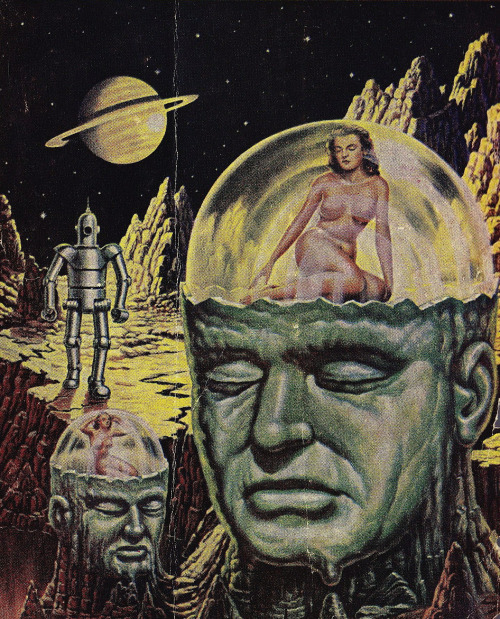
“Black Mirror”

This post (“Grocers of Despair”) at According to Hoyt, along with recent discussions of the Human Wave movement in science fiction, got me to thinking.

I had read a glowing review of Black Mirror, a British Twilight-Zone-like TV series, and a list of the best episodes. I fired up Netflix and watched the supposedly best episode, “The Entire History of You,” about a troubled couple using the technology of life-recording to break up in the ugliest possible way. Now I’ve counselled couples who break into each other’s phones and this was much the same, but more horrific than even that could be.

It was well-written, powerful, and depressing. Let’s focus on awful people and show how technology can enable them to be *even* *more* *awful*!

Long-suffering partner threatened to take away my future votes for what to watch. He still blames me for “The Constant Gardener.” So I watched one more last night, “White Bear.” Again, awful people doing creepy things. Humans! Who would want to be like them?

There’s no denying these are really great — artful, like the best short stories. But minus any Human Wave sense of struggling to beat back the darkness.

Because being fully human has a *purpose*, if you are well-adjusted. It might be religious, it might be building Teilhard de Chardin’s Noosphere and reaching the Omega Point with as much knowledge as possible, it might be building the best world for your children’s children’s children. But there are positive goals to strive for, not just surviving and contending with other humans for a shrinking share of a shrinking world. Raising children is a risky exercise, and you do it when you have some faith in the future. Malthusian dread and belief in ever-darker futures kills off the will to fight and to win against those who would tear it all down.

Grimdark art has its place as leavening for the “uplifting” stories that keep us going; maybe 10% of our stories might be grim, to remind us of the power of despair. “1984” is to remind us of how to avoid that fate, not a prediction. As “liberal” changed meaning (in the US) to become the opposite of free, “progressive” has become a belief in limits and controlling others. Academia, freed of the need to satisfy an audience by government support, now promotes arts that discourage accomplishment and exploration of expanding frontiers. We are to be afraid, to cluster for safety, to see other humans as threatening and in need of control. And to look to our academic and government betters for guidance, to deliver us from evil.

It’s easy to despair when you are looking for a job or to publish your book and no one — literally no one — responds to your resume or submission. That’s when you get up and start your own business or self-publish. And regulators will try to stop you, legacy publishers will pretend you don’t exist, but customers will take a small chance on you, and if you listen to them, you can make it.

https://www.youtube.com/watch?v=Sw3GIR70HAY

Men of Honor vs Victim Culture

Calvin on Victimhood

Calvin on Victimhood

The widely-noticed blog post by Jonathan Haidt, “Where microaggressions really come from: A sociological account,” starts out this way:

I just read the most extraordinary paper by two sociologists — Bradley Campbell andJason Manning — explaining why concerns about microaggressions have erupted on many American college campuses in just the past few years. In brief: We’re beginning a second transition of moral cultures. The first major transition happened in the 18th and 19th centuries when most Western societies moved away from cultures of honor (where people must earn honor and must therefore avenge insults on their own) to cultures of dignity in which people are assumed to have dignity and don’t need to earn it. They foreswear violence, turn to courts or administrative bodies to respond to major transgressions, and for minor transgressions they either ignore them or attempt to resolve them by social means. There’s no more dueling.

Campbell and Manning describe how this culture of dignity is now giving way to a new culture of victimhood in which people are encouraged to respond to even the slightest unintentional offense, as in an honor culture. But they must not obtain redress on their own; they must appeal for help to powerful others or administrative bodies, to whom they must make the case that they have been victimized. It is the very presence of such administrative bodies, within a culture that is highly egalitarian and diverse (i.e., many college campuses) that gives rise to intense efforts to identify oneself as a fragile and aggrieved victim. This is why we have seen the recent explosion of concerns about microaggressions, combined with demands for trigger warnings and safe spaces, that Greg Lukianoff and I wrote about in The Coddling of the American Mind…. The key idea is that the new moral culture of victimhood fosters “moral dependence” and an atrophying of the ability to handle small interpersonal matters on one’s own. At the same time that it weakens individuals, it creates a society of constant and intense moral conflict as people compete for status as victims or as defenders of victims.

This is very obvious to anyone paying attention to college campuses these days. And as he and the authors of the paper he discusses point out, this new culture of victimhood thrives only where there is very little actual victimization or inequality — under the umbrella of a micromanaging government or university administration who can be called on to recognize your victim status.

As we dissect this phenomenon, then, we first address how it fits into a larger class of conflict tactics in which the aggrieved seek to attract and mobilize the support of third parties. We note that these tactics sometimes involve building a case for action by documenting, exaggerating, or even falsifying offenses.

And an epidemic of falsification has occurred, with many of the most publicized cases of rape or hate crimes on campus having been revealed to be hoaxes or fabrications. In a world where young people are encouraged to think of themselves as members of oppressed minorities, some of the most privileged — affluent students on university campuses — demand more subsidies and more recognition for their special snowflake natures, and agitate for more grants and more programs to allow them to avoid repaying student loans and to work after they graduate at activist nonprofits.

In the settings such as those that generate microaggression catalogs [ed. note: I call these settings grievance bubbles in my writings], though, where offenders are oppressors and victims are the oppressed, it also raises the moral status of the victims. This only increases the incentive to publicize grievances, and it means aggrieved parties are especially likely to highlight their identity as victims, emphasizing their own suffering and innocence. Their adversaries are privileged and blameworthy, but they themselves are pitiable and blameless. [p.707-708] [This is the great tragedy: the culture of victimization rewards people for taking on a personal identity as one who is damaged, weak, and aggrieved. This is a recipe for failure — and constant litigation — after students graduate from college and attempt to enter the workforce]

One issue which is going to be more and more obvious with time: these students are leaving permanent records of their entitled and litigious attitudes in social media and online; I would not blame employers for looking these up and not employing those who have lied or exaggerated their grievances to demand special action.

But let’s return to the cultures of individual morality identified in the paper. Honor culture makes every person responsible for maintaining their boundaries with others and acting as necessary to punish aggression against them or their reputation; it is the prevailing system when interpersonal aggression is the dominant form of social control. In societies with hierarchical organizations as in feudal Europe or Japan, persons much above you in status were deferred to while persons much below you were deferential toward you, or else.

A) A Culture of Honor
Honor is a kind of status attached to physical bravery and the unwillingness to be dominated by anyone. Honor in this sense is a status that depends on the evaluations of others, and members of honor societies are expected to display their bravery by engaging in violent retaliation against those who offend them (Cooney 1998:108–109; Leung and Cohen 2011). Accordingly, those who engage in such violence often say that the opinions of others left them no choice at all…. In honor cultures, it is one’s reputation that makes one honorable or not, and one must respond aggressively to insults, aggressions, and challenges or lose honor. Not to fight back is itself a kind of moral failing, such that “in honor cultures, people are shunned or criticized not for exacting vengeance but for failing to do so” (Cooney 1998:110). Honorable people must guard their reputations, so they are highly sensitive to insult, often responding aggressively to what might seem to outsiders as minor slights (Cohen et al. 1996; Cooney 1998:115–119; Leung and Cohen 2011)… Cultures of honor tend to arise in places where legal authority is weak or nonexistent and where a reputation for toughness is perhaps the only effective deterrent against predation or attack (Cooney 1998:122; Leung and Cohen 2011:510). Because of their belief in the value of personal bravery and capability, people socialized into a culture of honor will often shun reliance on law or any other authority even when it is available, refusing to lower their standing by depending on another to handle their affairs (Cooney 1998:122–129). But historically, as state authority has expanded and reliance on the law has increased, honor culture has given way to something else: a culture of dignity. [p. 712-713]

The Enlightenment and the end of feudalism brought in a new kind of moral order, based on law and individual rights, which the authors call a “culture of dignity.” Most developed countries have adopted this model, where each person is deemed to be equal under the law and enjoys individual rights that law and state forces will enforce against others. The honor culture continues as an element of many subcultures, notably in the military, law enforcement, and areas where order has broken down, but the boundaries of allowable violence and retaliation are constrained; duelling and violence for retribution is now illegal. Offenses are now to be brought to authorities for resolution and punishment, and grievances below a minimal standard are to be dealt with socially.

B) A Culture of Dignity
The prevailing culture in the modern West is one whose moral code is nearly the exact opposite of that of an honor culture. Rather than honor, a status based primarily on public opinion, people are said to have dignity, a kind of inherent worth that cannot be alienated by others (Berger 1970; see also Leung and Cohen 2011). Dignity exists independently of what others think, so a culture of dignity is one in which public reputation is less important. Insults might provoke offense, but they no longer have the same importance as a way of establishing or destroying a reputation for bravery. It is even commendable to have “thick skin” that allows one to shrug off slights and even serious insults, and in a dignity-based society parents might teach children some version of “sticks and stones may break my bones, but words will never hurt me” – an idea that would be alien in a culture of honor (Leung and Cohen 2011:509). People are to avoid insulting others, too, whether intentionally or not, and in general an ethic of self-restraint prevails.

When intolerable conflicts do arise, dignity cultures prescribe direct but non-violent actions, such as negotiated compromise geared toward solving the problem (Aslani et al. 2012). Failing this, or if the offense is sufficiently severe, people are to go to the police or appeal to the courts. Unlike the honorable, the dignified approve of appeals to third parties and condemn those who “take the law into their own hands.” For offenses like theft, assault, or breach of contract, people in a dignity culture will use law without shame. But in keeping with their ethic of restraint and toleration, it is not necessarily their first resort, and they might condemn many uses of the authorities as frivolous. People might even be expected to tolerate serious but accidental personal injuries…. The ideal in dignity cultures is thus to use the courts as quickly, quietly, and rarely as possible. The growth of law, order, and commerce in the modern world facilitated the rise of the culture of dignity, which largely supplanted the culture of honor among the middle and upper classes of the West…. But the rise of microaggression complaints suggests a new direction in the evolution of moral culture.

Highly “evolved” settings are encouraging the culture of victimhood, where one maintains one’s status and reputation by competing to be recognized as a victim — the victim Olympics, it is sometimes rudely called.

C) A Culture of Victimhood
Microaggression complaints have characteristics that put them at odds with both honor and dignity cultures. Honorable people are sensitive to insult, and so they would understand that microaggressions, even if unintentional, are severe offenses that demand a serious response. But honor cultures value unilateral aggression and disparage appeals for help. Public complaints that advertise or even exaggerate one’s own victimization and need for sympathy would be anathema to a person of honor – tantamount to showing that one had no honor at all. Members of a dignity culture, on the other hand, would see no shame in appealing to third parties, but they would not approve of such appeals for minor and merely verbal offenses. Instead they would likely counsel either confronting the offender directly to discuss the issue, or better yet, ignoring the remarks altogether.[p.714-715]

A culture of victimhood is one characterized by concern with status and sensitivity to slight combined with a heavy reliance on third parties. People are intolerant of insults, even if unintentional, and react by bringing them to the attention of authorities or to the public at large. Domination is the main form of deviance, and victimization a way of attracting sympathy, so rather than emphasize either their strength or inner worth, the aggrieved emphasize their oppression and social marginalization. … Under such conditions complaint to third parties has supplanted both toleration and negotiation. People increasingly demand help from others, and advertise their oppression as evidence that they deserve respect and assistance. Thus we might call this moral culture a culture of victimhood because the moral status of the victim, at its nadir in honor cultures, has risen to new heights.[p.715]

The culture of victimhood is currently most entrenched on college campuses, where microaggression complaints are most prevalent. Other ways of campaigning for support from third parties and emphasizing one’s own oppression – from protest demonstrations to the invented victimization of hate-crime hoaxes – are prevalent in this setting as well. That victimhood culture is so evident among campus activists might lead the reader to believe this is entirely a phenomenon of the political left, and indeed, the narrative of oppression and victimization is especially congenial to the leftist worldview (Haidt 2012:296; Kling 2013; Smith 2003:82). But insofar as they share a social environment, the same conditions that lead the aggrieved to use a tactic against their adversaries encourage their adversaries to use that tactic as well. For instance, hate crime hoaxes do not all come from the left. [gives examples] … Naturally, whenever victimhood (or honor, or anything else) confers status, all sorts of people will want to claim it. As clinical psychologist David J. Ley notes, the response of those labeled as oppressors is frequently to “assert that they are a victim as well.” Thus, “men criticized as sexist for challenging radical feminism defend themselves as victims of reverse sexism, [and] people criticized as being unsympathetic proclaim their own history of victimization.”[p.715] [In this way, victimhood culture causes a downward spiral of competitive victimhood. Young people on the left and the right get sucked into its vortex of grievance. We can expect political polarization to get steadily worse in the coming decades as this moral culture of victimhood spreads]

I’ll point out that these environments tend to be artificially maintained — they are not natural outgrowths of business and commerce, where every participant has to cooperate with others to thrive and make a living. They are more like cloistered institutions of the past, supported by exterior economies, like convents and monasteries, or royal courts. When we say something is “academic,” we often mean it’s not important in the real world. And the money supporting it all is partly from parents, but mostly from government, which pays for research and subsidizes the loans that have allowed the schools to charge more than ever and hire all the administrators that make work for themselves by policing student activity.

So I suspect we’re seeing peak influence of the culture of victimhood, and natural corrections — like the refusal of businesses to degrade their competitive edge by further kowtowing to identity politicians — will push back. Part of this may be a repudiation of the Democratic party, which has co-opted much of the third-wave feminist and identity politics sentiment. Having used it through several election cycles, they are now so identified with it that any backlash will damage them. Trump’s current support is a result of decades of suppression of populist speech, and his un-PC style is actually being rewarded in polls.

Lastly, I’ll point out some similar classifications in Jane Jacobs’ Systems of Survival. She identified two syndromes — we might call them meme-complexes, systems of ideas that are internally consistent and self-supporting:

Moral Precepts
Guardian Syndrome Commerce Syndrome
  • Shun trading
  • Exert prowess
  • Be obedient and disciplined
  • Adhere to tradition
  • Respect hierarchy
  • Be loyal
  • Take vengeance
  • Deceive for the sake of the task
  • Make rich use of leisure
  • Be ostentatious
  • Dispense largesse
  • Be exclusive
  • Show fortitude
  • Be fatalistic
  • Treasure honor
  • Shun force
  • Compete
  • Be efficient
  • Be open to inventiveness and novelty
  • Use initiative and enterprise
  • Come to voluntary agreements
  • Respect contracts
  • Dissent for the sake of the task
  • Be industrious
  • Be thrifty
  • Invest for productive purposes
  • Collaborate easily with strangers and aliens
  • Promote comfort and convenience
  • Be optimistic
  • Be honest


The Guardian Syndrome roughly corresponds to the culture of honor, and it naturally evolved in a state where roaming bands of warriors — warlords — compete to control territory which (through agricultural populations or hunter-gatherer bands) generates food and wealth. As agriculture advanced, the warlords became a separate military and governing class, and cities began to develop. Trading and commerce flowered, and the ethos of the Commerce Syndrome developed as technology and trade overtook the produce of the land as a source of wealth. Cities grew, and classes of scribes, accountants, and religious orders became important. Law as a codification of wise rule, and then as recognition of individual rights, became a reliable way of settling grievances without taking up arms. And in the US, the idea of regulating the state itself via a Constitution allowed a free people to coexist with others who believed quite differently by enforcing a neutral code of law.

Interactions between victimhood activists and others are especially vicious because of the mutual misunderstandings of the importance of honor, dignity, and truth to the older cultures. Any disagreement with the claim of victim status is recast as another microagression, and only complete submission to their claims is accepted. When action is taken to address their concerns, it is only satisfying for a brief period before new outrages are identified — there must always be something to complain about, or they would be required to justify their existence and self-esteem via some real accomplishment. Meanwhile, lies and personal character assassination of those deemed incorrect or of the class of oppressors make people who are steeped in the honor or dignity cultures violently angry, and their angry outbursts are used as more evidence of the need to suppress them.

The culture of complaint and victimhood thrives only in those insulated bubbles where government supports institutions detached from customer demand. This includes government itself, especially those bureaucracies which have gained the power to maintain themselves regardless of party in power, but also includes public schools and all the universities which derive most of their funds from government grants and student loans — which is nearly all of them. One way of reducing this detachment from reality and accountability is to cut funding for these institutions and encourage individual and entrepreneurial solutions to the problems they were assigned to address. What we have now is sometimes called the clerisy — a quasi-religious governing structure of scribes and functionaries who act to increase their own power from some protected perch of authority, directing the lives of others with what they think is superior intellect and morality. And there are now so many of them living well on the borrowed and taxed dollars taken from the real economy that their rules and demands are strangling the economy that supports all of us.

[update]

Vox just ran a piece by Oliver Lee, who’s quitting his job as a professor to find more meaningful work:

All of these issues lead to one, difficult-to-escape conclusion. Despite all the finger-pointing directed at students (“They’re lazy! They’re oversensitive! They’re entitled!”), and the blame heaped on professors (“Out of touch and irrelevant to a man”), the real culprit is systemic. Our federally backed approach to subsidizing higher education through low-interest loans has created perverse incentives with disastrous consequences. This system must be reformed.

He suggests a smaller, more accountable higher education system, stripped of the excess federal loan funding.


Death by HR: How Affirmative Action Cripples OrganizationsDeath by HR: How Affirmative Action Cripples Organizations

[From Death by HR: How Affirmative Action Cripples Organizations,  available now in Kindle and trade paperback.]

The first review is in: by Elmer T. Jones, author of The Employment Game. Here’s the condensed version; view the entire review here.

Corporate HR Scrambles to Halt Publication of “Death by HR”

Nobody gets a job through HR. The purpose of HR is to protect their parent organization against lawsuits for running afoul of the government’s diversity extortion bureaus. HR kills companies by blanketing industry with onerous gender and race labor compliance rules and forcing companies to hire useless HR staff to process the associated paperwork… a tour de force… carefully explains to CEOs how HR poisons their companies and what steps they may take to marginalize this threat… It is time to turn the tide against this madness, and Death by HR is an important research tool… All CEOs should read this book. If you are a mere worker drone but care about your company, you should forward an anonymous copy to him.



“Fear is the Mindkiller” – Published at Tangent Online

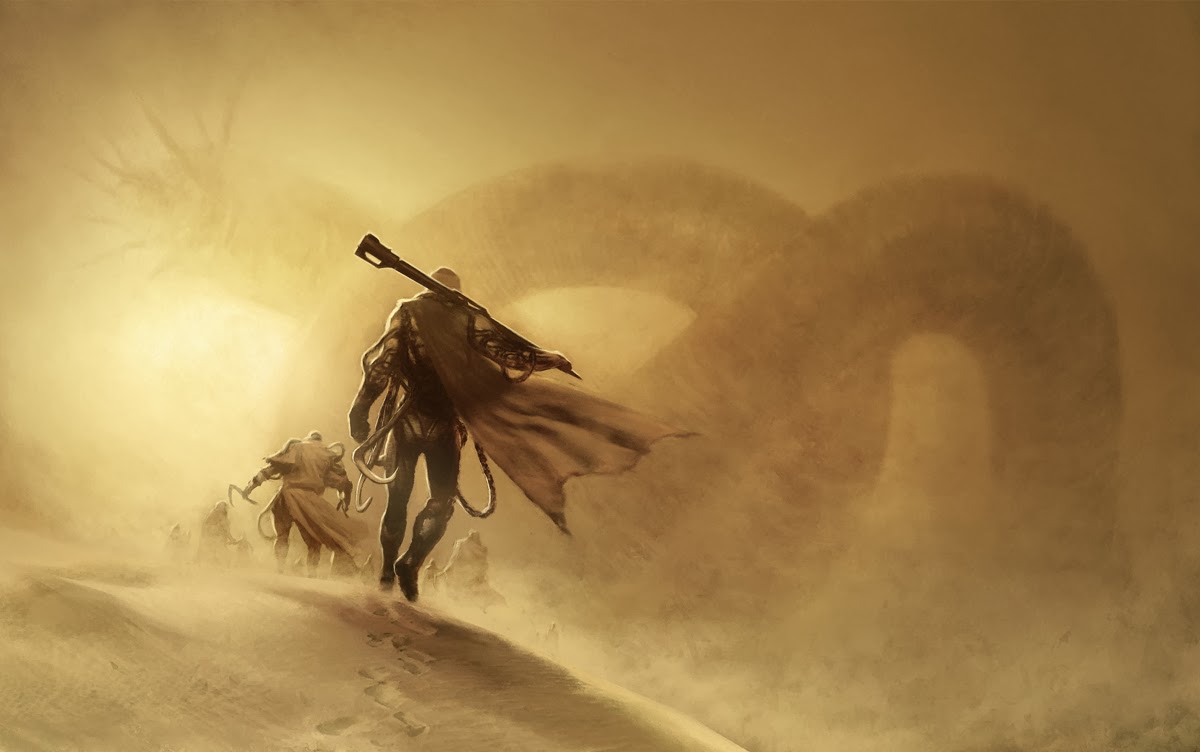
Dune cover art by Henrik Sahlstrom

Dune cover art by Henrik Sahlstrom

Tangent Online has published my essay on culture wars in science fiction here. A key paragraph:

A significant chunk of the population is still guided by the sentiment that women are weak and need more protection. These people are the Baptists in a bootleggers-and-Baptists coalition that unites to give statists more and more power to meddle and regulate, with the bootleggers being political parties that use these sentiments to justify their social engineering. Every new law and regulation is an opportunity for graft and extracting campaign contributions from businesses who want to be left alone or mold the law and regulations to hurt their competitors more, and every new edict (beyond dealing with obvious externalities like pollution) decreases the total wealth and growth rate of the economy. Politicians whip up fear — fear of terrorists, illegal immigrants, “the 1%,” sexist men, authoritarian Christianists, whatever works — to gain power, and then shy away from any actual solutions so they can repeat these emotional hooks for the next election. “Fear is the Mindkiller” — make someone afraid, and you weaken their reasoning power.

“Shrivers: The Substrate Wars 3”: First Look

PrintCover6x9v1_975x698

Based on feedback from workshopping it at Taos, I’ve rewritten the opening of Shrivers: The Substrate Wars 3. The book won’t be done for months, but if you want a preview, here it is in PDF format: Shrivers First Look. Now if I could only find an agent or publisher!

For Some Writers, Only the “Political Now” Matters

Ancient SF

Ancient SF

One thing that’s lacking among our progressive brethren is humility, a sense of what they don’t know and should not try to fake knowing. They are ahistorical and programmed by a faith-based belief system (for example, the faith that “all gender roles are social constructs with no biological basis.”)

So you suggest gently to a young writer that they should not try to write science fiction without understanding the science well enough to project it plausibly. Especially if the writer is a young woman, she will protest and say something implying science is also just a social construct, meaning “whatever I feel it should be, it is.” Or ask that historical novels be reasonably well researched and plausible — which is asking too much for some. They believe it is unfair to criticize some people for writing implausible or inconsistent stories, because by doing so you are discriminating against them and interfering with their right to succeed. Ultimately, of course, readers determine what is read, but by influencing what is promoted and made available at retail, progressives are insuring readers get less of what they want and more of what the nomenklatura think is good for them. And these literary-progressive writers are encouraged by academia and grants to think their status entitles them to success as writers — and while the very best of them will be successful writers, the majority will not be read by anyone outside their mutual support group.

Initially science fiction was about future science and the reactions to it from individuals and societies not too different from those of the day. Then the New Wave introduced a greater emphasis on imagined future or alien societies with quite different motivations and systems — when well-done, the rules of the imagined societies were plausibly projected from the biological, social, and economic motivations of the members of the society. In fantasy, you again had plausible workings-out of magic systems, fantasy entities, and societies of elves and the like. It’s the working out and understanding of the story problems presented by an imagined plausible world that expands the mind and increases understanding of very different Others.

If stories include mostly characters who behave as modern progressives think they should, any broadening effect is lost. Modern taboos and habits of thought were developed to match a modern milieu, and it is wrongheaded and anti-diversity — a variety of cultural imperialism! — to imply that people of the past and future would adopt and benefit from current ideas of “correct thought.” This error is a variety of presentism — applying standards of the current day to past and future societies.

Progressives accept an alien biological imperative and will sit still for stories where, say, the male sex of the G’Tharr are confined to their homes but no one in their society is especially interested in equality. But when the society is recognizably human, then suddenly the correctness goggles appear, and characters who behave like the perceived recent enemies of their tribe are not tolerated.


Death by HR: How Affirmative Action Cripples OrganizationsDeath by HR: How Affirmative Action Cripples Organizations

[From Death by HR: How Affirmative Action Cripples Organizations,  available now in Kindle and trade paperback.]

The first review is in: by Elmer T. Jones, author of The Employment Game. Here’s the condensed version; view the entire review here.

Corporate HR Scrambles to Halt Publication of “Death by HR”

Nobody gets a job through HR. The purpose of HR is to protect their parent organization against lawsuits for running afoul of the government’s diversity extortion bureaus. HR kills companies by blanketing industry with onerous gender and race labor compliance rules and forcing companies to hire useless HR staff to process the associated paperwork… a tour de force… carefully explains to CEOs how HR poisons their companies and what steps they may take to marginalize this threat… It is time to turn the tide against this madness, and Death by HR is an important research tool… All CEOs should read this book. If you are a mere worker drone but care about your company, you should forward an anonymous copy to him.


Sunday Pimping

Red Queen: The Substrate Wars 1

Red Queen: The Substrate Wars 1

Ah, “pimp Sunday.” Another fine tradition that starts today!

I got back from Taos Toolbox three weeks ago. It was interesting meeting people mostly going the tradpub route, working hard to get short fiction into publications. It was suggested I need to write some short stories to get my name known, so I wrote one, which has so far survived the winnowing process at a new ‘zine, Mothership Zeta, which looks like it’s going to be a fun read.

Also interesting to learn that even what I would consider to be proven great writers — Walter Jon Williams and Nancy Kress, who ran the Toolbox — have trouble getting and keeping good agents and publishers. Walter is now doing well self-publishing his backlist, but even he has difficulty getting major projects off the ground. Meanwhile, Nancy (a self-described pantser, meaning she doesn’t plot out a book in advance) has written one good novel she can’t get published, and despite winning a Nebula for her latest novella and being one of the better-liked writers around, has a spotty record in getting publisher support.

The takeaway lesson is that changes in the publishing business are pushing writers into self-publishing, where at least they have a chance at making a living if they work hard and develop a deep backlist. The total revenues in conventional SF&F publishing are stagnant or falling, and new markets like media tie-ins, flash fiction, and new venues like phones for reading are where many of the readers have gone. There’s a great hunger for SF&F works in developing countries, and anyone looking ahead has to consider getting their work out in Simplified Chinese and publishing with some of the phone media platforms out there. Which all ties in to the Hugo controversy, where a tiny US-centric group has defended their award as “the best of SF&F” but retreat to “what Worldcon-going fans (less than two thousand voting each year before 2014) think is best” when questioned closely.

But wait, I’m supposed to pimp my work here. My current series, The Substrate Wars, is about a group of libertarian-ish students who discover that the universe runs on a computational substrate, and by hacking the substrate with quantum computers, they can create not only quantum gateways to anywhere, but weapons of unimaginable power and replicators that can end material shortages for everyone. They are pursued by Homeland security and the intelligence agents of many nations before they escape to a New Earth, then work from there to free Earth’s people from their security and surveillance states. Working out how you would actually do that while doing minimal damage was a lot of fun.

My Taos readers found the going a bit rough on the start of the third book, tentatively called “Shrivers.” So I’m reworking the beginning to provide a stronger narrative line. OTOH, several spontaneously commented they thought the series would make great movies (based on the synopses I had prepared.) So I’m working on that now, heading to the Calliope Workshop, a new weekend seminar at UCLA meant to introduce new writers to agents and publishers interested getting liberty-oriented stories into pop culture outlets like movies.

The “logline” started out as a single-sentence description encapsulating the setting, protagonist, story problem, antagonist, and goal, which would be hand-written on the spine of a script or in the reading log as an executive summary. The idea is to demonstrate the basic appeal of the story so that a decisionmaker can quickly reject it if it doesn’t work for their purposes, or ask for more if it does. Time is short and no one in the industry has time to do more than reject 99% of what’s presented to them as quickly as possible. So remember the lesson of Powerpoint’s dominance: you only have a few seconds to get someone interested enough to stop for your work.

Loglines for the Substrate Wars books:

RED QUEEN

In a near-future US surveillance state, California college students invent quantum gateways and have to fight Homeland Security to gain their freedom on a new planet.

http://amzn.to/1Idwmx1

NEMO’S WORLD

From their base on a new planet, freedom-fighting techno-rebels use their discovery of quantum gateways to steal all the world’s nuclear weapons and bring down Earth’s oppressive governments.

http://amzn.to/1IibqTw

SHRIVERS

As humanity expands to new colony planets and enjoys a Golden Age of peace and prosperity, the new government has to fight a fleet of robotic destroyer ships to save humanity from extinction.

[In progress: release date around November 2015]

One of my earlier books on applying attachment theory to relationships and mate-seeking is still free today: http://amzn.to/1IibPVO

Substrate Wars: Loglines

Red Queen: The Substrate Wars 1

Red Queen: The Substrate Wars 1

I’ll be going to a seminar at UCLA in a few weeks, a whole weekend of talking about story and marketing to publishers and other media (notably movies.) So I’m working over the synopses and pitches. One tool I’ve never used is the logline, a single-sentence description encapsulating the setting, protagonist, story problem, antagonist, and goal.

Here’s what I’ve come up with for the Substrate Wars series:

RED QUEEN: In a near-future US surveillance state, college students invent quantum gateways and have to fight Homeland Security to gain their freedom on a new planet.

NEMO’S WORLD: From their base on a new planet, rebels use their discovery of quantum gateways to steal all of Earth’s nuclear weapons and bring down Earth’s oppressive governments.

KALIKANS: As humanity expands to new colony worlds and enjoys an era of peace and prosperity, the new government has to fight a fleet of robotic destroyer ships to save humanity from extinction.

If you haven’t succumbed to my relentless marketing yet, you can still start reading it here.

Back from Taos Toolbox

Taos Toolbox 2015

Taos Toolbox 2015 Class

I attended this year’s Taos Toolbox novel-oriented writing workshop, which wrapped up Saturday. Instructors Nancy Kress and Walter Jon Williams whipped us into shape (literally — a whip appeared mid-workshop), with special guest lecturers Carrie Vaughn and Emily Mah Tippetts. A marmot subbed for the usual bear appearance, and here are a few of the notable critique quotes (as collected by Nancy Kress):

“You really can’t be understated if you are a vampire clown.”
“It would probably take more than three days to eat a whole human being — although I don’t know that personally.”
“St. George the Dragonslayer should drive a Charger, not a Mustang.”
“There was a little too much pig fighting.”
“Your critique makes me glad I did not get a degree in literature.”
“It’s a gi-normous playground of awesome.”
“Get those characters out of that apartment!”
“I can see that you incorporated everyone’s critiques of your last week’s story. The problem is that you incorporated everyone’s critiques of your last week’s story.”
“I HATE rats and I will never ever read this story about rats again!”
“I know he’s the kind of person who doesn’t do his own rat killing because he can correctly use a word like ‘penultimate.'”
“I don’t mind them devouring Chad for lunch because he’s sort of a dork anyway.”
“Will the real protagonist please stand up?”
“This is a new subgenre: the “clomance,” a romance between a person and a clone.”
“I want the meaning of life to be more than an orange muffin.”
“I didn’t enjoy his tongue getting cut out.”
“It was dystopian but without the fun parts of dystopia.”
“I love the alien eggs, but they gotta go.”
“The character seems like Jane Bond.”
“It was nice to have a male character handed reproductive threats!”
“You have a missing clothing problem.”
“I get the impression you’ve never actually been a 20-year-old male Superpower.”
“You can’t start with an ‘Interlude’ because it’s not between anything — it’s just a ‘Lude’.”
“You have White Belgium Syndrome.”
“Unless this is ‘Dinner With Andre’ in space, you need more action.”
“She’s not neurotic enough for a high-school girl.”
“All female characters must keep their shirts on unless they’re actually on fire!”
“This story is torture across all five senses, and I thank you for that.”
“You’re not really suicidal if you’re having fun fondling breasts.”
“Everyone loves werewolves in mini-skirts.”
“If being grounded as a kid was all it took to trigger superpowers, I’d have godlike omniscience.”
“You should definitely go with the larcenous wood nymphs.”
“Everybody’s too sweet. I want to dip my toe in the cesspool of evil.”
“My favorite part was the mini-kayak armor.”
“I love the part where the girlfriend writes her good-bye note on the heating bill.”
“The harem of slave girls wasn’t enough to make him unlikeable to you?”
“Add more goats.”
“If this book had any more atmosphere, you could terraform Mars.”
“I like that Thor is a jock-boy and talks like Drunken Hulk.”
“I would love to see the Fury leave her anger-management session to go kill somebody.”

Attendees to watch out for: S Marino, Terry Gene, Patrick Lundrigan, Sharon Joss, Chris Kelworth, Diana Davis Olsen, Jeb Kinnison, Anna Yeatts, Brandon McNulty, Chris Bauer, Sally McBride, Lawrence Buentello, Paul DesCombaz, Ginny Campen, Gerda Shank, Barbara Caridad Ferrer, and Sunil Patel.

More on the workshop: http://www.taostoolbox.com/

Review: “Nemo’s World: The Substrate Wars 2”

Nemo's World: The Substrate Wars 2

Nemo’s World: The Substrate Wars 2

I missed this review of Nemo’s World when it came out on Goodreads, which I don’t pay a lot of attention to:

Kjirstin’s review Apr 08, 15
5 of 5 stars

After having escaped the immediate dangers of the last novel, the intrepid explorers and students turn their minds to how to use their new discovery — instantaneous travel to anywhere in the universe — to benefit the rest of mankind. But in order to make this possible, they need to defang the governments and ruling classes of the nations of Earth. So most of this story is about how they manage to maneuver politicians into realizing that their time is over. It was actually quite enjoyable having the recalcitrant US government being one of the last holdouts, absolutely SURE that they could somehow avoid the consequences and do things that would bring back the status quo ante.

I loved the idea of setting up colony planets and the gates to allow people to head there. (I have a soft spot for colonization and pioneering in my sci-fi in general.) It was such a hopeful vision — a way to move past the stagnant and ossified way of doing things and into something new with all sorts of potential. (As well as some musing over how to avoid the mistakes of the past, which we see as the first group of explorers have to set up a government for themselves.)

Great fun and a good addition to the series. I’m definitely looking forward to reading the next one when it comes out!

If you haven’t read the first in the series, Red Queen: The Substrate Wars 1, it’s best to start there.

Donation to Heinlein Society

Heinlein Society

Heinlein Society

The Heinlein Prize Trust (www.heinleinprize.com) is partnering with The Heinlein Society in the fundraising for the new Robert A. Heinlein bust to be displayed in the Missouri state capitol’s “Hall of Famous Missourians.” The Trust has pledged to match dollar-for-dollar contributions made by “Heinlein’s Children” to raise the necessary funds for the bust and associated plaque, pedestal, and ceremony.

I noticed their fundraising update showed they were still short, and realized I should contribute the rest. I owe Robert A. Heinlein an enormous debt — I grew up fatherless in Kansas City, his hometown, and his novels for young readers taught me more about being a good person, and a good man, than any other person or author. His work (and other science fiction) aimed me toward becoming a scientist, which inspired me to work to get into MIT. I’ve retired after a series of careers (rather like Heinlein himself) to write science fiction and fact, and I want his example to continue to inspire young people.

[Jeb Kinnison writes at JebKinnison.com and SubstrateWars.com, and his second science fiction novel, Nemo’s World, is “well-written science fiction that harkens back to the golden age of Heinlein and Asimov.” — IndieReader.]